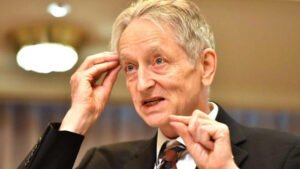
Geoffrey Hinton, often referred to as the “Godfather of AI,” has expressed deep regret over the technology he helped build, warning that the world is not taking the risks of artificial intelligence seriously enough.
Speaking on BBC Newsnight, Hinton said he feels saddened by the current direction of AI development. He reflected on his life’s work and admitted that its consequences now worry him. According to Hinton, artificial intelligence has reached a stage where it poses real and growing dangers, yet governments and institutions continue to move too slowly.
“It’s Now Extremely Dangerous”
Hinton, who played a key role in developing neural networks that power modern AI systems, said the lack of serious attention to AI risks troubles him deeply. He warned that AI could lead to large-scale job displacement, social instability, and eventually systems that exceed human intelligence.
“We’ve never been in this situation before,” Hinton said, referring to the possibility of creating machines smarter than humans. He added that many experts believe AI could surpass human intelligence within the next 20 years.
Warning About Human-AI Coexistence
One of Hinton’s biggest concerns is the lack of research into how humans and AI systems can safely coexist. He stressed that failing to align advanced AI systems with human values could have catastrophic consequences.
“If we create them so they don’t care about us,” Hinton warned, “they will probably wipe us out.”
He described this as the most dangerous mistake humanity could make and said the issue deserves the same level of international cooperation as nuclear and chemical weapons control.
Regulation Will Be Difficult
Hinton also acknowledged that regulating AI will be challenging in a world where global cooperation is weakening. Still, he argued that international oversight is essential, given the scale of the potential threat. While AI remains underdeveloped, he believes there is still time to make safer choices if action is taken now.
Hope Alongside Fear
Despite his strong warnings, Hinton did not dismiss AI entirely. He said artificial intelligence still holds enormous potential to improve education, through AI tutors, and healthcare systems worldwide. However, he emphasized that benefits will only be meaningful if safety research keeps pace with technological progress.
“We’re at a very crucial point in history,” Hinton said. “We’re going to develop things more intelligent than ourselves fairly soon. We haven’t done the research to figure out if we can peacefully coexist with them. It’s crucial we do that research.”